

Rules for the Planet: How Environmental Law Shapes Modern Life
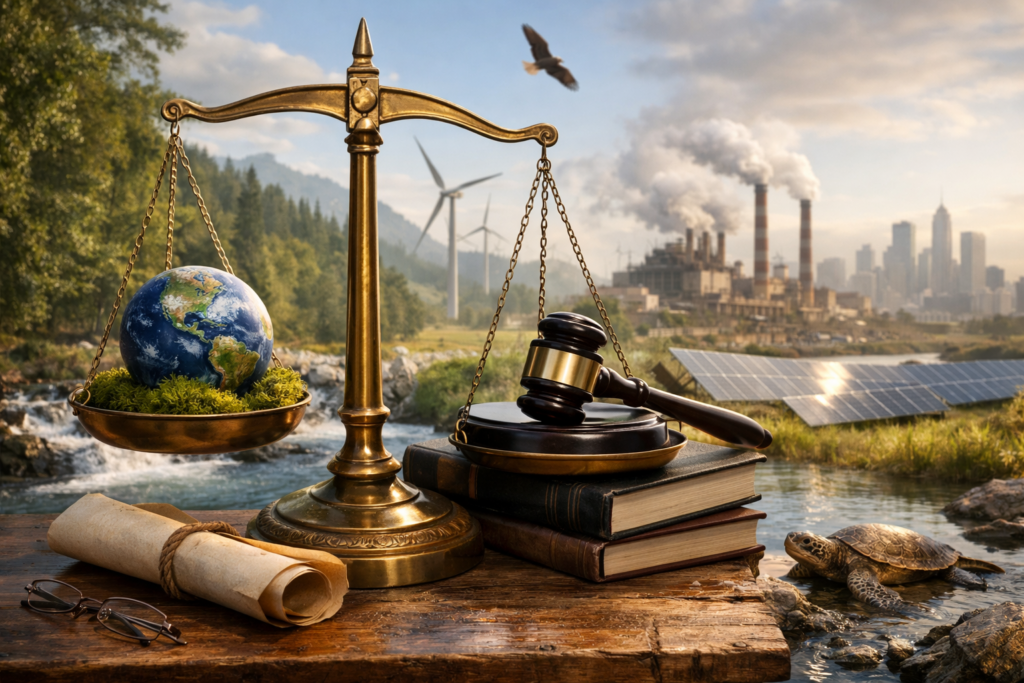
What Environmental Law Is and Why It Exists
Environmental law is a broad body of rules that governs how people, businesses, and governments interact with the natural world. Its central purpose is to prevent or reduce harm to air, water, land, wildlife, and human health by setting standards, requiring planning, and enabling enforcement. Unlike many areas of law that focus on private disputes, environmental law often addresses shared resources—rivers, forests, coastlines, and the atmosphere—where individual actions can impose costs on everyone else.
Over time, environmental law has evolved from narrow anti-nuisance doctrines into complex statutory and regulatory systems. It now covers issues ranging from toxic chemicals and waste disposal to biodiversity conservation and climate change. Because environmental harms are frequently technical and long-term, the field relies heavily on scientific evidence, risk assessment, and monitoring data.
Core Principles That Guide Environmental Rules
While environmental laws differ widely across jurisdictions, several principles commonly appear in legislation, court decisions, and international agreements:
- Prevention and precaution: It is usually cheaper and more effective to prevent pollution than to clean it up. The precautionary approach supports protective action even when scientific certainty is incomplete.
- Polluter pays: Parties responsible for environmental harm should bear the costs of mitigation, cleanup, and compensation, rather than shifting those burdens to the public.
- Sustainable development: Development should meet present needs without compromising future generations’ ability to meet theirs, integrating environmental factors into economic planning.
- Public participation and access to information: Many systems require environmental disclosures and provide opportunities for communities to comment on projects or challenge decisions.
- Environmental justice: Environmental benefits and burdens should be distributed fairly, addressing disproportionate impacts on low-income communities and marginalized groups.
Key Areas of Environmental Law
Pollution Control (Air, Water, and Land)
Pollution control laws set limits on what can be released into the environment and establish permitting systems for factories, power plants, farms, and other sources. Air quality rules may target smog-forming pollutants, particulates, sulfur dioxide, and nitrogen oxides, while water laws regulate discharges into rivers, lakes, and coastal areas. Land-focused rules address soil contamination, landfill management, and the handling of hazardous substances.
Permits are a common tool: a facility may operate only if it monitors emissions, uses required controls, reports data, and stays below defined limits. Noncompliance can lead to penalties, corrective orders, or litigation.
Environmental Impact Assessment and Project Review
Environmental impact assessment (EIA) laws require decision-makers to evaluate the likely environmental effects of proposed projects—such as highways, mines, dams, or large real estate developments—before approvals are granted. An EIA process typically includes baseline studies, alternatives analysis, mitigation measures, and public consultation. The goal is not only to predict harm, but to redesign projects to avoid sensitive habitats, reduce pollution, and improve long-term outcomes.
Even when an EIA does not automatically block a project, it can reshape it through conditions: limits on water use, restoration requirements, seasonal restrictions to protect wildlife, or community health safeguards.
Conservation and Biodiversity Protection
Conservation laws protect ecosystems and species by establishing parks and protected areas, regulating hunting and trade, and safeguarding habitats such as wetlands, coral reefs, and old-growth forests. Endangered species protections can affect land use and infrastructure planning, requiring careful siting and habitat mitigation. These laws reflect the understanding that biodiversity supports services humans rely on—pollination, flood control, soil fertility, and fisheries.
Chemicals, Waste, and Site Cleanup
Modern economies produce complex chemical mixtures and large volumes of waste. Environmental law regulates chemical manufacture and use, requires safe storage and labeling, and sets rules for transporting hazardous materials. Waste laws address recycling targets, extended producer responsibility (where producers help finance disposal), and safe treatment of medical, electronic, and industrial waste.
Cleanup statutes are especially important when contamination persists for decades. They may impose liability on current operators, past owners, and waste generators, encouraging due diligence in property transactions and driving investment in remediation technologies.
Climate Change and Energy Transition
Climate-focused environmental law is growing rapidly. It includes greenhouse gas reporting, emissions trading schemes, renewable energy mandates, efficiency standards, methane controls, and rules that guide climate risk disclosure in finance. Climate litigation—claims against governments for inadequate action or against companies for misleading disclosures—has become a major feature in many legal systems. Adaptation law is also emerging, addressing coastal resilience, wildfire management, water scarcity, and heat protections for workers and residents.
How Environmental Law Is Made and Enforced
Environmental governance usually involves three layers:
- Legislation: Parliaments or congresses enact statutes that set goals, define authority, and create rights and obligations.
- Regulation and permitting: Agencies translate statutes into detailed standards, permit conditions, monitoring requirements, and guidance.
- Enforcement and adjudication: Violations can be addressed through inspections, administrative penalties, civil lawsuits, or criminal prosecution. Courts also review agency decisions and interpret statutory meaning.
Enforcement relies on credible monitoring—emissions data, discharge sampling, satellite observations, and community reporting. Increasingly, regulators use digital tools, remote sensing, and transparency portals to detect violations more quickly and target high-risk sources.
The Role of Citizens, Communities, and Businesses
Environmental law is not only a government-to-industry system. Many jurisdictions recognize avenues for public involvement, including requests for environmental records, participation in permit hearings, and lawsuits to enforce standards when regulators do not act. Community organizations often contribute local knowledge—such as pollution hot spots or patterns of illness—that improves decision-making.
Businesses, meanwhile, interact with environmental law through compliance programs, audits, supply-chain standards, and sustainability reporting. Strong environmental management can reduce legal risk, improve access to capital, and strengthen brand trust. For industries with significant impacts—energy, manufacturing, agriculture, shipping—legal obligations can also drive innovation in cleaner technologies.
Persistent Challenges and Future Directions
Environmental law faces recurring challenges: limited enforcement resources, political shifts, scientific uncertainty, and the difficulty of managing cumulative impacts across entire regions. Pollution does not respect borders, so international coordination matters, yet national priorities can diverge. Another challenge is speed—legal systems often move slower than ecological change, especially in fast-moving areas like climate science and emerging contaminants.
Looking forward, the field is likely to expand in three directions: stronger climate accountability, deeper integration of environmental justice into permitting and enforcement, and broader recognition of nature’s value—whether through ecosystem service accounting, stricter habitat protections, or even legal rights for rivers and ecosystems in some jurisdictions. At its best, environmental law serves as society’s planning tool for living within ecological limits while maintaining public health and economic stability.