

From Stadiums to Streams: How Entertainment and Sports Shape Modern Life
The Shared Stage of Entertainment and Sports
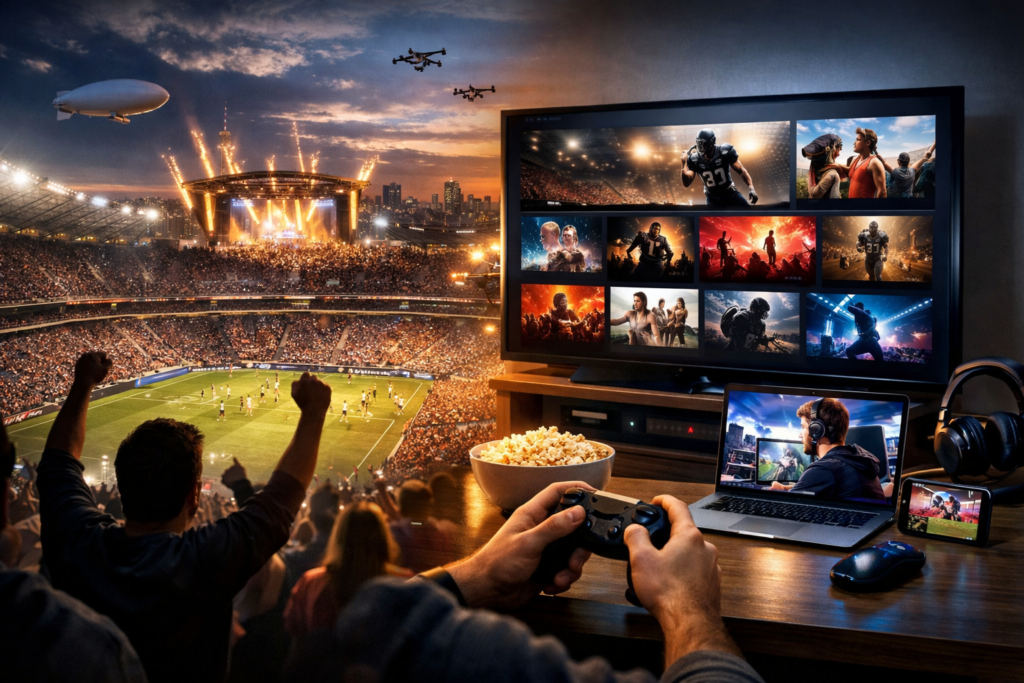
Entertainment and sports are often treated as separate worlds—one built on scripted stories, the other on unpredictable competition. In practice, they increasingly operate on the same stage: both deliver emotion, spectacle, heroes and villains, rituals, and a sense of belonging. A championship match can feel like a season finale, while a hit series can create fandoms with the loyalty of a hometown club.
What binds them is the promise of shared experience. Whether people gather in an arena, a living room, or a group chat, they come to witness something that feels larger than daily life: excellence under pressure, dramatic turns, and moments worth retelling.
How Sports Became a Form of Mass Entertainment
Sports have always been popular, but modern sports culture is inseparable from entertainment infrastructure: broadcast production, highlight packages, sponsorship, celebrity coverage, and narrative framing. The camera chooses angles, the commentary supplies context, and social media spreads the best moments faster than any evening news ever could.
Leagues and federations also design seasons and events to maximize anticipation—opening nights, rivalry weeks, playoffs, and finals. These structures echo entertainment arcs: exposition, rising stakes, and climactic resolution. Even individual athletes are presented as characters with backstories, styles, and personal brands.
The Role of Storytelling
Fans rarely follow raw statistics alone. They follow stories: a veteran chasing one last trophy, a newcomer challenging an established dynasty, or a team rebuilding after heartbreak. Documentaries and behind-the-scenes series amplify this effect by turning training, locker rooms, and personal lives into episodic content.
The Business Engine: Media, Sponsorship, and the Attention Economy
At the center of both entertainment and sports is attention—finite, valuable, and fiercely contested. Media rights deals fund leagues and clubs; advertising supports free-to-watch content; subscriptions and pay-per-view models monetize dedicated fans. This economy rewards properties that can consistently command live viewership, because live audiences are harder to skip and more valuable to advertisers.
Sponsorship is also evolving from simple logo placement to integrated partnerships. Brands build campaigns around athletes, create fan experiences at venues, and sponsor digital content that lives beyond game day. Meanwhile, entertainment franchises partner with sports for crossovers—special jerseys, themed nights, and collaborative merchandise—blurring category lines.
Globalization and Localization at Once
Streaming platforms and social networks allow a league in one country to find fans worldwide. Yet the most powerful sports identities remain local: the neighborhood team, the school rival, the city’s colors. Successful organizations manage both forces—global reach and local authenticity—by offering localized content, multilingual coverage, and community programs.
Technology Transforming the Fan Experience
Technology has changed how audiences discover, watch, and discuss sports and entertainment. Instead of a single broadcast, fans now expect multiple camera feeds, real-time stats, short-form highlights, and interactive features. The “second screen” is often the first: people follow live updates, memes, and commentary while watching the main event.
Key Innovations Shaping Consumption
- Streaming and on-demand viewing: Full matches, condensed replays, and personalized highlight reels fit different schedules and attention spans.
- Data and analytics: Advanced metrics deepen understanding and fuel debates, fantasy leagues, and betting markets.
- Immersive formats: Virtual reality experiments, 360-degree replays, and enhanced audio aim to replicate presence from home.
- Creator ecosystems: Independent commentators, podcasters, and short-form creators influence narratives alongside traditional media.
These tools expand access but also fragment attention. A single performance can be experienced as a full broadcast, a two-minute clip, a stat line, or a viral moment—each creating a different kind of fan.
The Cultural Power of Fandom and Identity
Sports and entertainment are cultural languages. They provide shared references, traditions, and social signals: jerseys, chants, quotes, and inside jokes. For many people, a team or a franchise becomes part of identity—something inherited from family, discovered through friends, or adopted as a personal statement.
Fandom can be a powerful force for community. Viewing parties, watch-alongs, and online forums help people connect across geography and background. At the same time, intense rivalry can tilt into toxicity if not balanced by respect and responsible platform moderation.
Representation and Social Influence
Athletes and entertainers often serve as role models and cultural leaders, using visibility to advocate for causes or bring attention to social issues. This influence can inspire positive change, but it also comes with scrutiny. Audiences increasingly expect transparency from organizations and ethical behavior from public figures, pushing leagues and studios to address fairness, inclusion, and accountability.
Training, Performance, and the Human Side of Spectacle
Behind the spectacle is intense work. Elite athletes combine physical conditioning with psychology, nutrition, recovery science, and tactical study. Their careers are short, and their livelihoods depend on performance under pressure. Similarly, entertainers—actors, musicians, and creators—navigate demanding schedules, public expectations, and constant competition for relevance.
This shared reality has led to more open conversations about mental health, burnout, injuries, and the need for sustainable systems. The public is more aware that performance is not just talent; it’s preparation, support, and resilience.
Where Entertainment and Sports Are Heading
The next era will likely be defined by convergence: more interactive viewing, deeper personalization, and broader participation. Esports continues to grow as a bridge between gaming and traditional sports presentation. Women’s sports are expanding rapidly, gaining investment and audiences that demand equal quality in coverage and marketing. Meanwhile, rule changes, scheduling formats, and broadcast innovations will keep evolving to match how audiences actually watch—often in short bursts, across platforms, and with social interaction built in.
What Fans Can Expect Next
- More choice: multiple feeds, commentary options, and tailored highlight packages.
- More access: behind-the-scenes content and direct-to-fan channels that bypass traditional gatekeepers.
- More responsibility: increased focus on athlete welfare, fairness, and integrity across competition and media.
Ultimately, entertainment and sports endure because they deliver something that algorithms alone can’t manufacture: authentic stakes and shared emotion. In a world of endless content, the moments that unite people—an underdog win, a record-breaking performance, a story that resonates—remain the most valuable currency of all.